
Inside the Mind of a Wolfdog: Why They Think, Not React
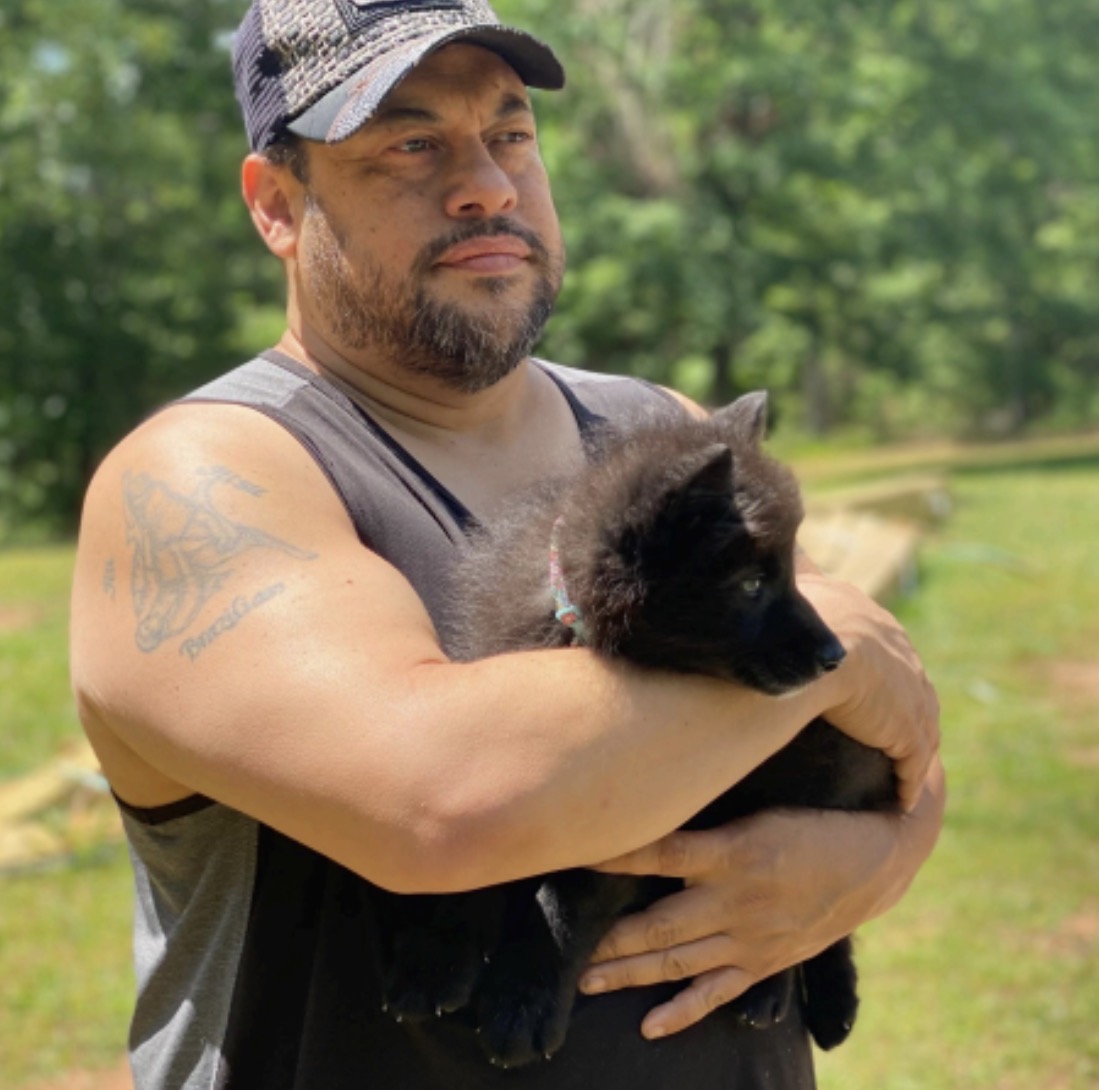
When I first met Zamunda, she was just a puppy and already studying me like she’d read every book in the room. Her eyes didn’t just look at me, they measured me. I could feel her taking in every shift of my body, every pause, every breath. Most puppies jump, lick, or bark for attention. Zamunda didn’t. She stood still, watching quietly, trying to figure out who I was and what kind of mind I carried.
That first hour told me everything I needed to know. This was not a dog who could be shaped by treats or toys. Zamunda needed something deeper, not a command, not a correction, but understanding.
When I sat on the ground, she finally came closer. Not because I asked her to, but because curiosity and trust pulled her forward. That is the beginning of every true relationship with a wolfdog. They move toward you not for what you hold in your hand, but for what they feel in your energy.
Learning from Curiosity
People often ask why I don’t use rewards when I teach. I tell them, “Because wolfdogs learn by curiosity, not by trade.” When you offer food for every task you create a performer, not a thinker. You build a habit loop, not a connection.
In psychology there’s a term called intrinsic motivation. It means being driven by something inside rather than by a reward outside. The science behind it goes back to the 1950s when researchers began realizing animals could learn simply by exploring. A rat running through a maze with no prize at the end still remembered the path. That kind of learning doesn’t come from reflexes. It comes from thought.
Wolfdogs live in that same cognitive space. They build what we might call “mental maps” of the world. They remember where you leave your shoes, the sound of your truck on the driveway, the order of the morning routine. They learn patterns that have nothing to do with treats or scolding. They think because thinking makes them feel safe and balanced.
The Problem with Rewards
I’ve met many good trainers who rely on positive reinforcement. It’s kind, and far better than fear or pain, but it still misses the mark with wolfdogs. You can’t bribe a mind that values freedom more than approval.
A wolfdog quickly figures out when you’re trying to manipulate it. You can almost see the light go out in their eyes. When they realize the food is the reason for the behavior, not the relationship, the learning stops being real. They’ll still perform the trick, sure, but the spirit behind it is gone.
Zamunda once refused to enter her crate, but instead of crate training her with a piece of chicken, I simply sat nearby reading, She later walked in on her own. She had watched me long enough to understand I wasn’t trying to contain her, she found out on her own how useful the crate was as a calm space. That decision came from her own mind. Similar to a dog house, you don’t need to look up on YouTube how to teach a dog to use a dog house, they find its usefulness all on their own. That’s intrinsic motivation, the quiet satisfaction of figuring it out.
The Human Role
Raising a wolfdog is less about control and more about environment. You become the steady center in a world that constantly moves. Every reaction you give them, good or bad, becomes data in their head. They watch how you handle frustration, how you recover from noise or change. They learn from your regulation, not your repetition.
If you shout or move too fast, they reflect that energy back. If you stay composed, they settle. That’s not magic, that’s observation. Their intelligence is tied to social reading. They read you far better than they read commands.
When Zamunda grew older she began testing boundaries. She’d wander a little too far during walks then glance back, waiting to see what I would do. I didn’t call her. I simply changed direction. Within seconds she adjusted, following quietly. That’s what I call “thinking distance.” She wasn’t obeying, she was processing choice. That’s what makes wolfdogs extraordinary.
Why Intrinsic Motivation Lasts
There’s a simple truth I’ve seen over and over. Anything learned from outside can fade. Anything learned from inside stays for life.
A wolfdog trained only by correction or reward must be reminded forever, training must be consistent to prevent regression. A wolfdog guided by understanding never forgets. Once they connect the dots between behavior and emotional harmony, it becomes part of who they are.
When Zamunda learned to wait at the doorway before going outside, it wasn’t because I blocked her way. I just held still until she thought through the situation. The next day she did it on her own. No command, no gesture, just awareness. You could almost feel her thinking, “If I pause, things feel calm.”
That moment is the real reward.
The Science Behind Reflection
Modern research now supports what wolfdog owners have known for decades. Studies on animal cognition show that many species experience what’s called self-directed learning. When animals are allowed to make small decisions, even mistakes, they form stronger neural connections. The brain records the experience differently when it’s chosen rather than forced.
Wolfdogs, being part wolf, have incredibly high cognitive engagement. In simple terms, their brains crave puzzles. They need to understand why something happens, not just how to respond to it. That’s why overtraining can actually dull them. Too many commands and corrections block their natural curiosity.
If you let them figure things out, they develop problem solving skills that carry through every part of life. They become calm, confident and far less reactive.
Mistakes as Lessons
People often panic when their wolfdog makes a mistake, but mistakes are where real learning hides. When Zamunda chewed a chair leg I didn’t yell. I simply removed her from the room for a moment and placed her outside, then brought her back calmly. The next time she approached the chair she sniffed it, looked at me, and walked away. That’s reflection. She wasn’t scared of me, she just connected action with calm consequence.
She learned to manage her own impulses, which is far more powerful than being told “no” a thousand times.
You can see a similar pattern in wild wolf packs. Young wolves test rules constantly but they learn through the reactions of the group, not through direct punishment. The group stays calm. Boundaries are enforced by energy and presence, not by shouting or striking.
Teaching Through Stillness
One of the hardest lessons for new wolfdog owners is to do less. The human urge is to talk, to guide, to fix. But silence teaches faster.
If a wolfdog is unsure, let it think. Don’t fill the space with noise. Their minds work best when the environment gives them time to observe.
When Zamunda was learning to stay close during walks I would hide every time she wandered too far. I never called her back. After a few seconds she would notice I was gone and scrambled to find me, realizing that movement happens when we’re connected. It didn’t take long before she stayed beside me naturally.
That kind of understanding can’t be trained. It has to be discovered.
The Bond That Builds Itself
Eventually Zamunda grew into a calm adult who didn’t need commands at all. If I stood up, she stood. If I sat, she relaxed. When strangers approached she’d look to me first before deciding how to act. That’s partnership, not obedience.
People sometimes call it “a healthy form of separation anxiety.” I call it trust with awareness. She was bonded, but not dependent. She had learned that our connection was the safest space in her world.
That’s what happens when learning comes from thought instead of reaction. The animal becomes self-governed.
Understanding the Mind, Not Controlling It
The hardest part for many people is letting go of the idea that control equals safety. Control only creates pressure. Understanding creates cooperation.
If you teach a wolfdog through thought, you’ll find yourself speaking less every month. They start predicting you, matching your rhythm. That’s not dominance, that’s shared intelligence.
Some call them hybrids, but in truth they’re bridges. They stand between instinct and reflection. And when we meet them there, not with commands or bribes, but with quiet respect, they show us what real communication looks like.
Final Thoughts
I often think back to that first day with Zamunda, her eyes locked on mine, her mind already years ahead of her age. She was testing to see if I was worth following. I didn’t pass by giving her food. I passed by giving her peace.
That’s how wolfdogs learn. They are not impressed by tricks or tone. They are drawn to steadiness, patience, and clarity.
When you work with them from that place, you stop being a trainer and start becoming a partner.
Wolfdogs think. They do not react. And if you let them, they’ll teach you how to do the same.
Author’s Note
This article begins my monthly column The Cognitive Wolfdog Series for WolfdogNews.com. I’m Tony Nila, Through these writings I hope to share what years with wolfdogs have taught me: that real growth happens when we stop teaching for control and start learning alongside them.